
Woland surveyed the view of Moscow from the roof of Pashkov’s House, which was built in 1784-1786, supposedly by V. Bazhenov, and is located on the corner of Znamenka and Mokhovaya. From here, the characters watch the fire at the Griboyedov House, which was started by Korovyev and Behemoth. This is where the Master and Margarita’s fate was decided.
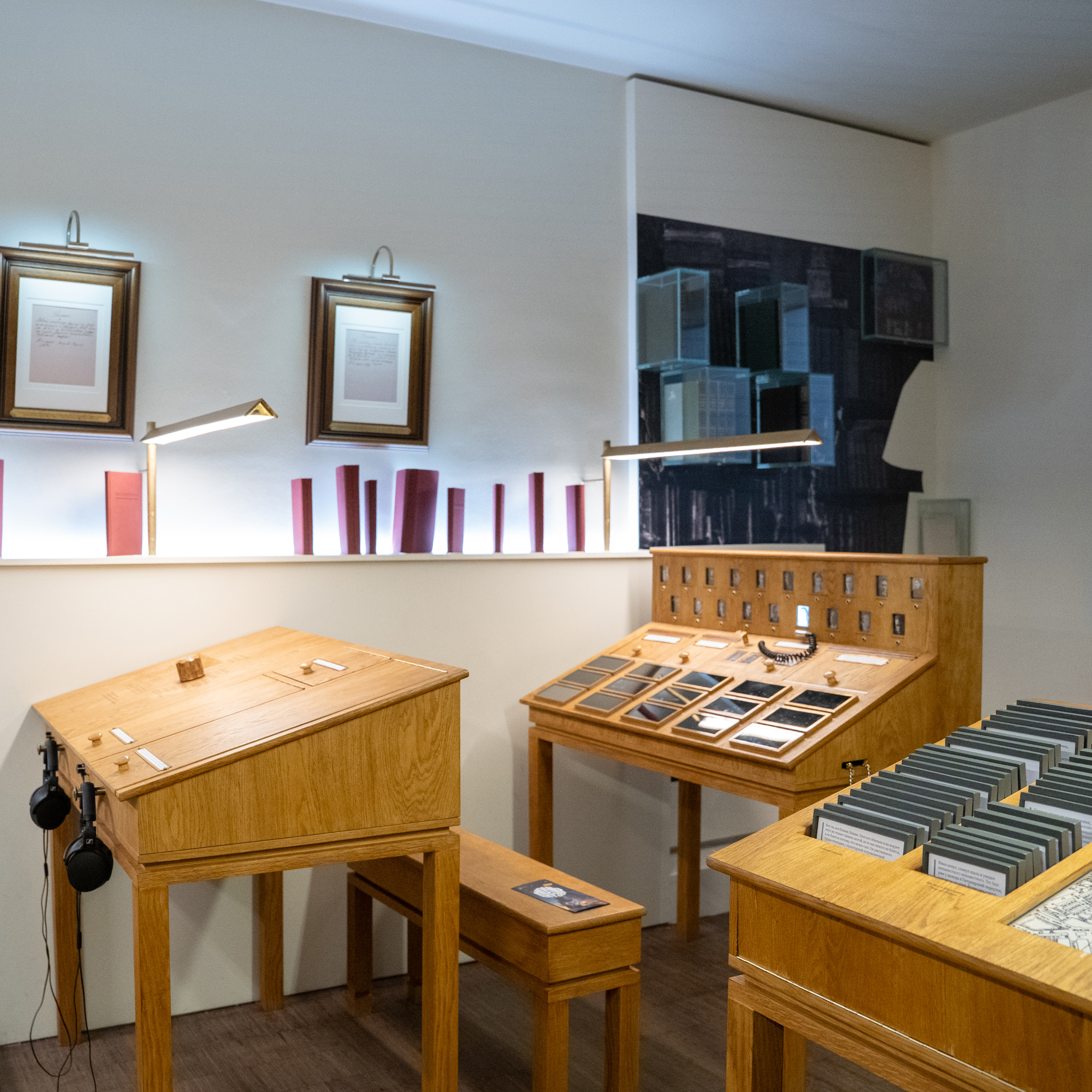
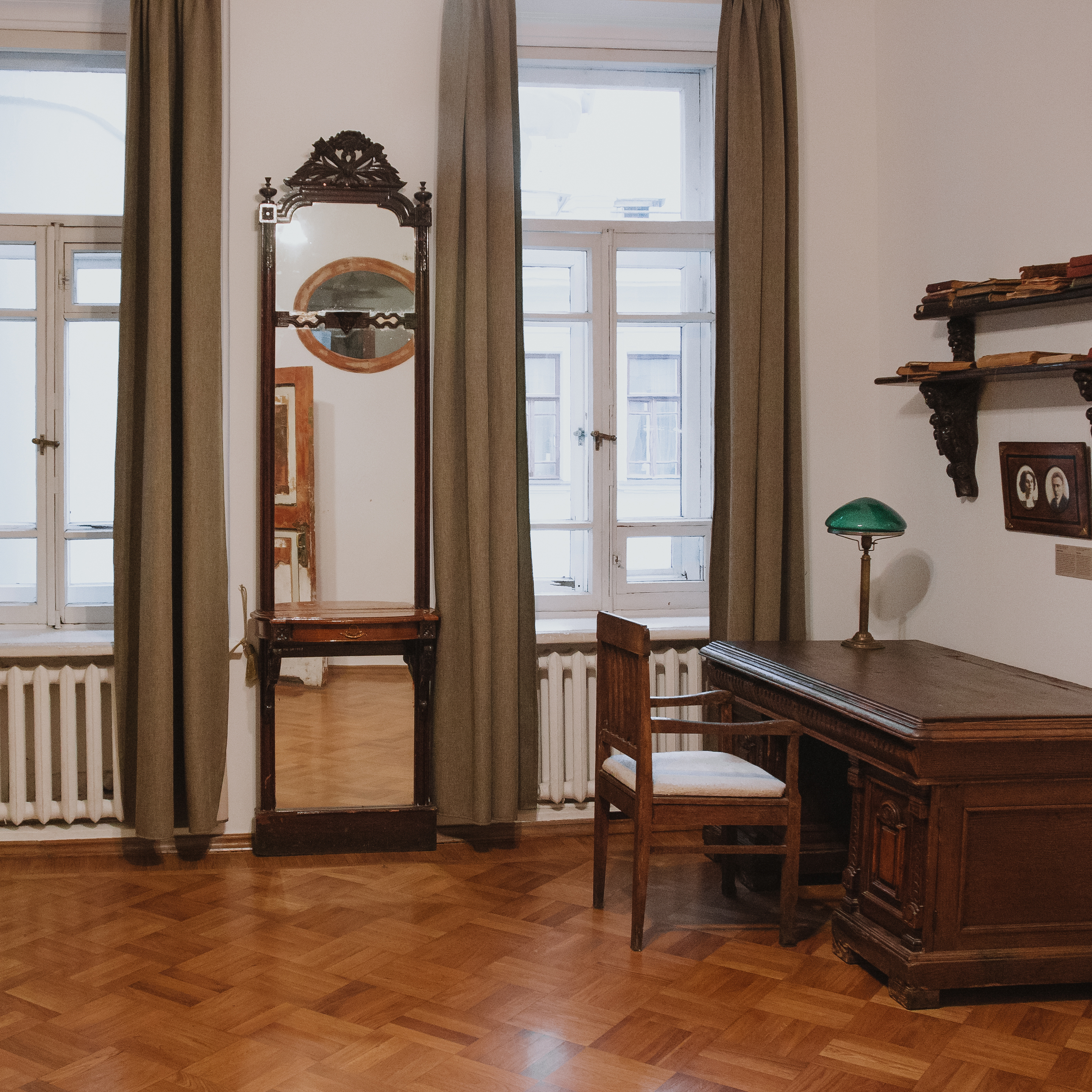
In Bulgakov’s novel, this building was described as, ‘One of the most beautiful in Moscow’. Confirming this, E. Bulgakova remembered that Pashkov’s House and its neighbourhood were one of the writer’s favourite places in the city. In Autumn 1921, Bulgakov planned to write a play about Rasputin and asked at the Rumyantsev Museum for periodicals from 1917. Whilst he was working on the materials for the production at the end of 1920s and beginning of the 1930s, Bulgakov often visited the State Library as a reader (there are library passes in the writer’s archive). In The Master and Margarita, Woland claims that he was invited to the State Library to index the works of the black magic practitioner Gerbert Avrilaksky. In one of the editions of the novel (1932-1936), Bulgakov described Pashkov’s House in detail — after the scene on the roof of the house, Woland and his retinue pass through the reading rooms and cloakroom to find themselves in the courtyard.
Point on the map
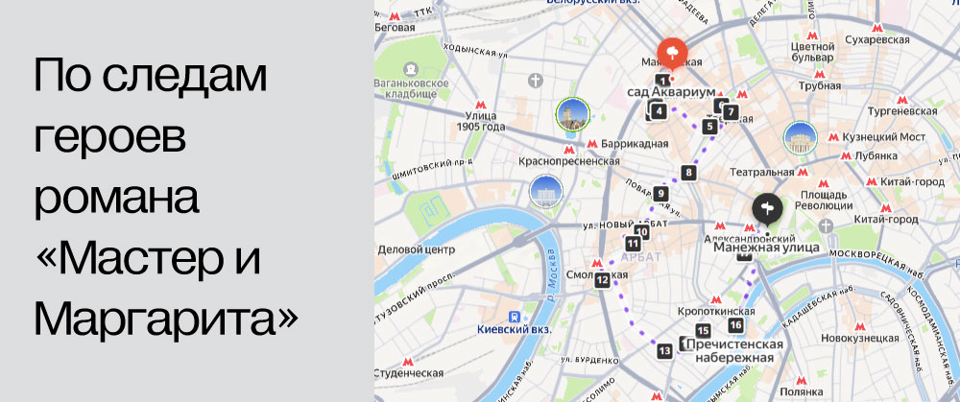
This map shows where the address sits and how it is tied into the project routes.
Routes
This point belongs to one or more routes. Open them as sequential walks rather than isolated cards.
In the footsteps of the characters of The Master and Margarita
- Stop 19
- 5,52 km
- 4,5 h
Daily life in Moscow in the 1920s and 1930s plays an important role in the multi-layered novel, The Master and Margarita — it is not simply a background for the fantastical events and the characters’ unusual adventures. The novel, addressed to Bulgakov’s contemporaries, describes the lives of Muscovites in detail, with the arguments arising in communal flats, the issue of flats, the spy scare, the invisible but tangible atmosphere of the Great Terror and so on. The events of the novel take over the entire centre of Moscow, and Bulgakov was almost always very precise in the details – the exceptions include only a few addresses (Margarita’s house, the Dramlit house, Stravinsky’s clinic etc.). Bulgakov’s contemporaries would easily recognize their city in the other details, had the novel been printed at that time. Since then, the city has changed a lot – some houses have been demolished, some have been rebuilt unrecognizably, but through the layers, it is possible to glimpse Bulgakov’s Moscow. Following in the footsteps of Bulgakov’s characters, you can feel Ivan Bezdomny’s horror after the death of Berlioz at Patriarch’s Ponds, his desperation in Herzen’s house, the scale of Satan’s ball in Spaso House, the eccentricity of Behemoth’s antics in the Torgsin on Arbat, and much more. The route begins at the Aquarium Garden, not far from Woland’s ‘unpleasant flat’, runs across Tverskoy Boulevard, takes in the lanes around Arbat and ends at the Alexandrovsky Garden, where Azazello and Margarita met.