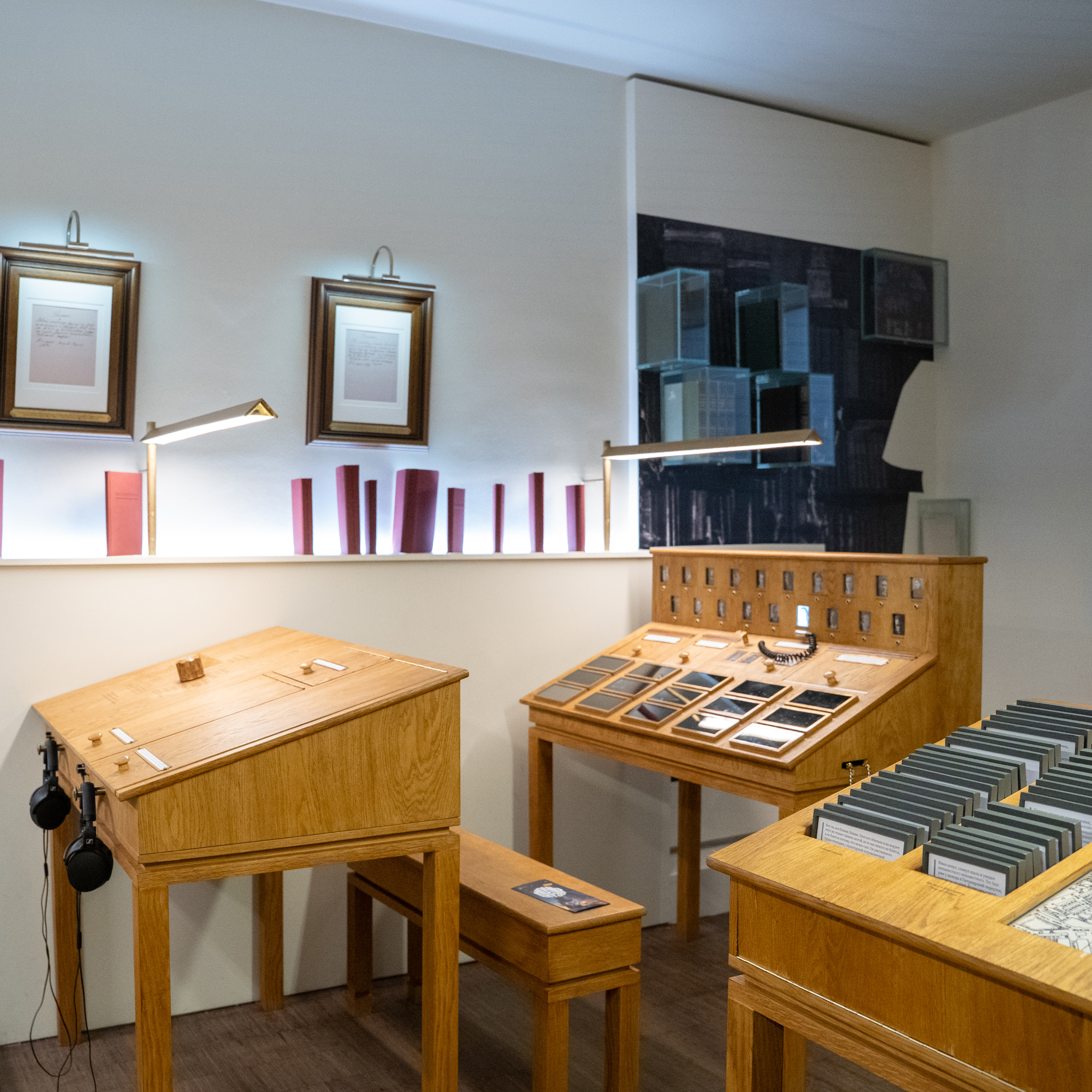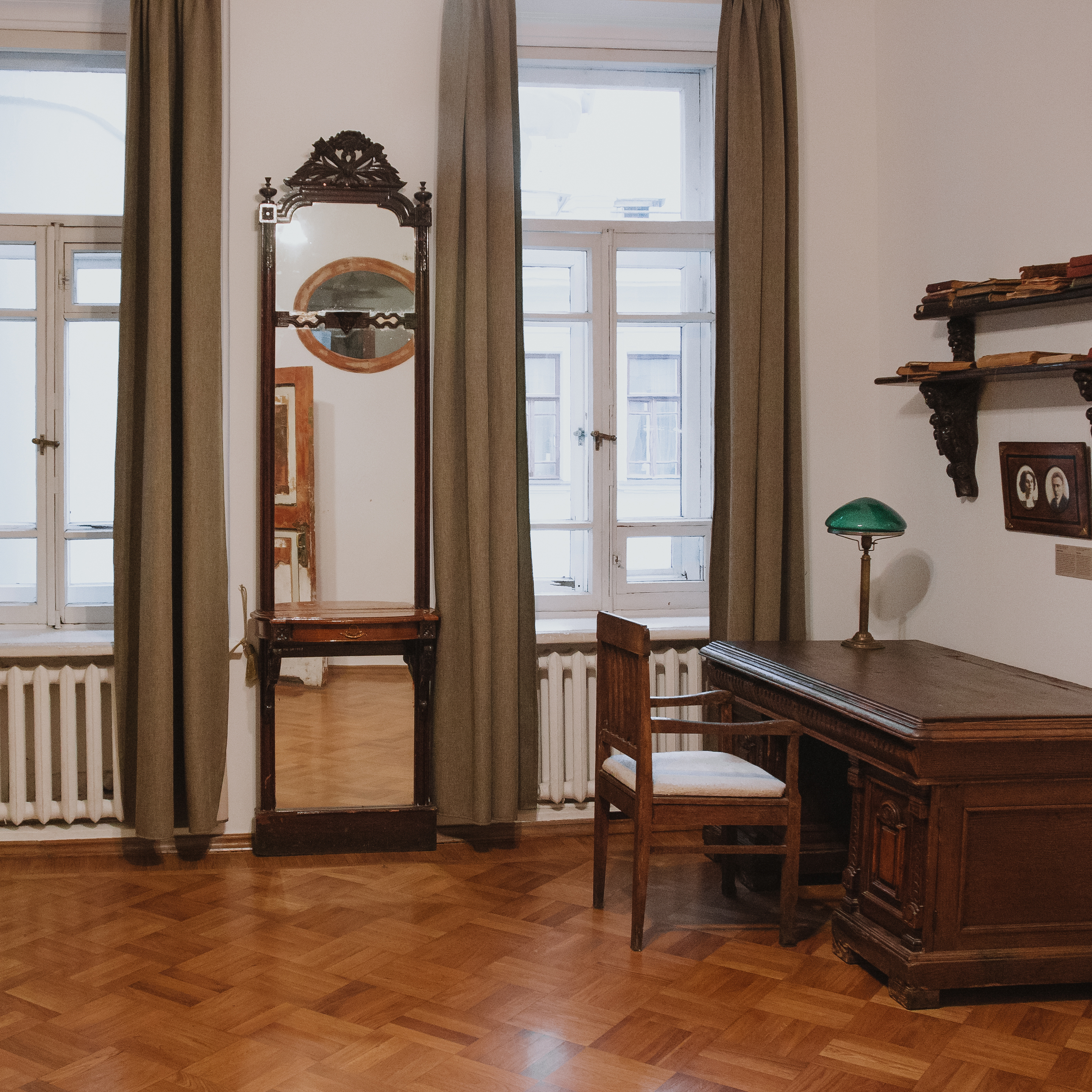


In April 1935, Bulgakov and E. Bulgakova were amongst several hundred guests at the spring ball organised by the American ambassador to the USSR, W.C. Bullitt. It is thought that this ball became the basis for Satan’s ball in The Master and Margarita. Bulgakov met Antoine de Saint-Exupéry at the reception in Spaso House in May 1935.
E. Bulgakova remembered that, at first, Bulgakov wrote the scene as a small ball in Woland’s bedroom, but, whilst he was ill, rewrote it and transformed the ball in the bedroom into a grandiose affair. Many famous people were present at the reception in the American embassy together with Bulgakov — from M. Tukhachevsky to V. Meyerhold. W.C. Bullitt reported with pride to Roosevelt, 'We got a thousand tulips from Helsinki, made a number of birch trees come into leaf early and at one end of the dining room we recreated a kolkhoz [collective farm] with peasants playing the accordion, dancers and all kinds of little childish things — birds, goat kids and a couple of bear cubs. E. Bulgakova added in her diary, 'In the hall with the columns people were dancing. Lights of different colours shone from the gallery. A whole flock of birds fluttered behind a net. The orchestra had been brought down from Stockholm… On the top floor they were serving shashlik. Red roses and French red wine. Downstairs it was all champagne and cigarettes.
Point on the map
This map shows where the address sits and how it is tied into the project routes.
Routes
This point belongs to one or more routes. Open them as sequential walks rather than isolated cards.
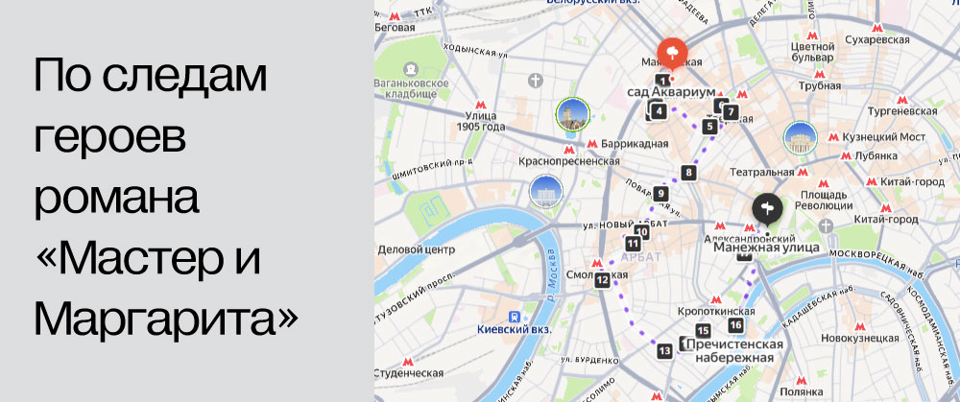
In the footsteps of the characters of The Master and Margarita
- Stop 12
- 5,52 km
- 4,5 h
Daily life in Moscow in the 1920s and 1930s plays an important role in the multi-layered novel, The Master and Margarita — it is not simply a background for the fantastical events and the characters’ unusual adventures. The novel, addressed to Bulgakov’s contemporaries, describes the lives of Muscovites in detail, with the arguments arising in communal flats, the issue of flats, the spy scare, the invisible but tangible atmosphere of the Great Terror and so on. The events of the novel take over the entire centre of Moscow, and Bulgakov was almost always very precise in the details – the exceptions include only a few addresses (Margarita’s house, the Dramlit house, Stravinsky’s clinic etc.). Bulgakov’s contemporaries would easily recognize their city in the other details, had the novel been printed at that time. Since then, the city has changed a lot – some houses have been demolished, some have been rebuilt unrecognizably, but through the layers, it is possible to glimpse Bulgakov’s Moscow. Following in the footsteps of Bulgakov’s characters, you can feel Ivan Bezdomny’s horror after the death of Berlioz at Patriarch’s Ponds, his desperation in Herzen’s house, the scale of Satan’s ball in Spaso House, the eccentricity of Behemoth’s antics in the Torgsin on Arbat, and much more. The route begins at the Aquarium Garden, not far from Woland’s ‘unpleasant flat’, runs across Tverskoy Boulevard, takes in the lanes around Arbat and ends at the Alexandrovsky Garden, where Azazello and Margarita met.