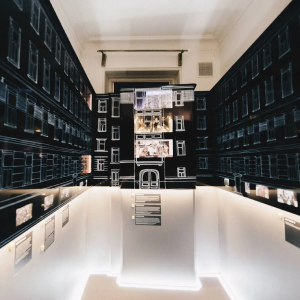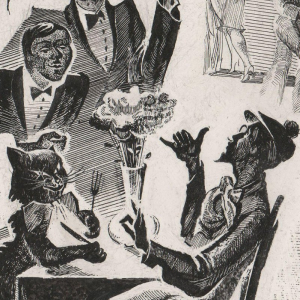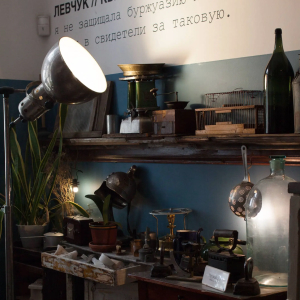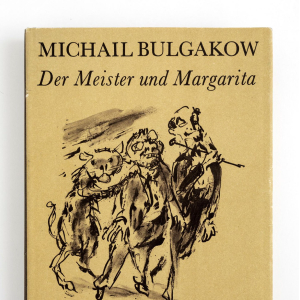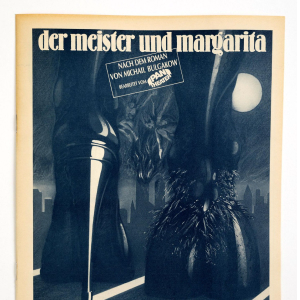

In the famous Torgsin (which stood for All-Union Association for Trade with Foreigners), it was possible to buy scarce products and goods with hard currency in the early 1930s. In The Master and Margarita, this is where the famous scene unfolds in which the cat Behemoth gulps down entire mandarins with their peels. Bulgakov would drop in here when he managed to receive commission in currency for productions of his plays abroad.
Torgsins functioned in Moscow from 1931 until 1936. E. Bulgakova described one of her visits with Bulgakov to a Torgsin in her diary when he needed a suit for a reception at an embassy: ‘Today, Mikhail and I, having first popped into see the tailor Pavel Ivanovich, went to the Torgsin. We bought good English material for eight golden rubles per metre. The salesclerk assured us it was material for dress suits. But there weren’t any starched shirts, let alone dress shirts. We bought black shoes and black silk socks’.
Point on the map
This map shows where the address sits and how it is tied into the project routes.
Routes
This point belongs to one or more routes. Open them as sequential walks rather than isolated cards.
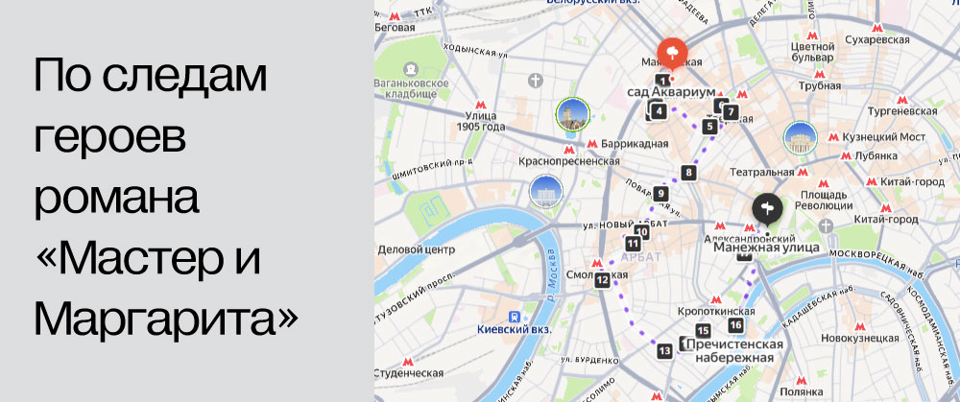
In the footsteps of the characters of The Master and Margarita
- Stop 13
- 5,52 km
- 4,5 h
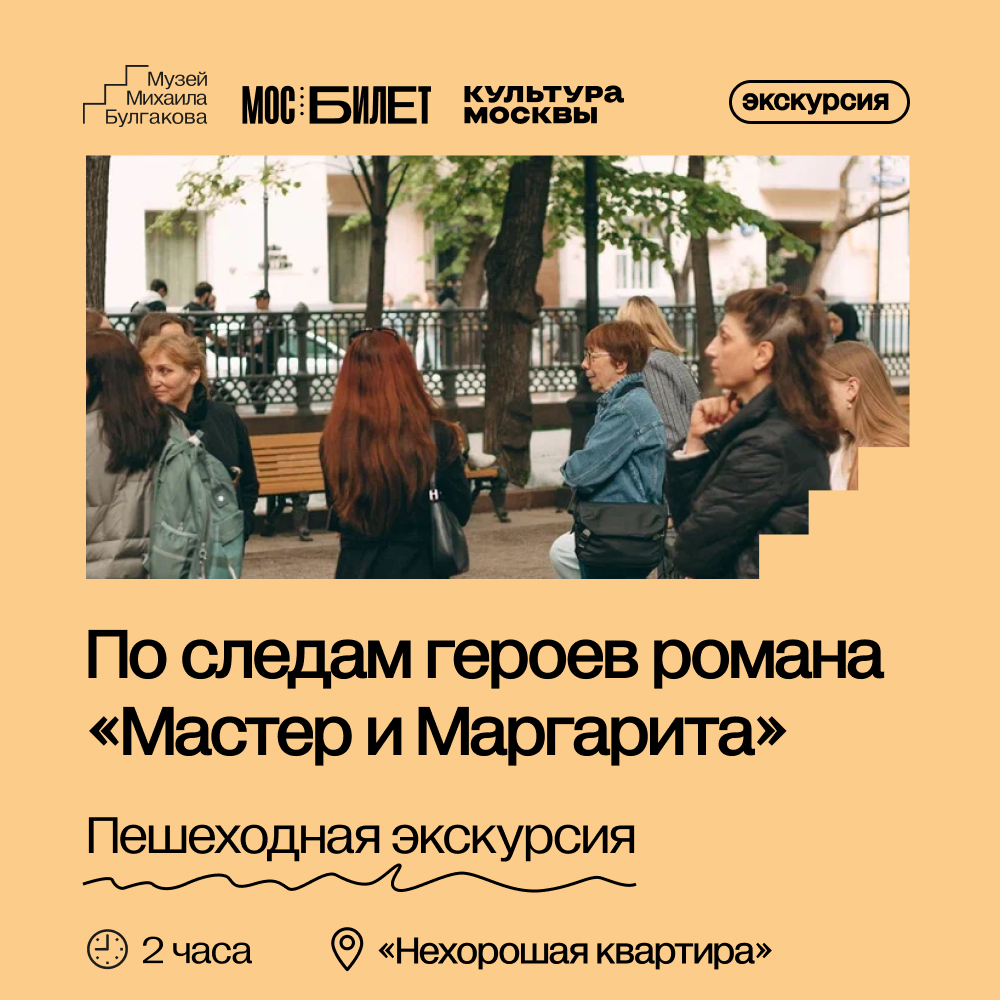
Daily life in Moscow in the 1920s and 1930s plays an important role in the multi-layered novel, The Master and Margarita — it is not simply a background for the fantastical events and the characters’ unusual adventures. The novel, addressed to Bulgakov’s contemporaries, describes the lives of Muscovites in detail, with the arguments arising in communal flats, the issue of flats, the spy scare, the invisible but tangible atmosphere of the Great Terror and so on. The events of the novel take over the entire centre of Moscow, and Bulgakov was almost always very precise in the details – the exceptions include only a few addresses (Margarita’s house, the Dramlit house, Stravinsky’s clinic etc.). Bulgakov’s contemporaries would easily recognize their city in the other details, had the novel been printed at that time. Since then, the city has changed a lot – some houses have been demolished, some have been rebuilt unrecognizably, but through the layers, it is possible to glimpse Bulgakov’s Moscow. Following in the footsteps of Bulgakov’s characters, you can feel Ivan Bezdomny’s horror after the death of Berlioz at Patriarch’s Ponds, his desperation in Herzen’s house, the scale of Satan’s ball in Spaso House, the eccentricity of Behemoth’s antics in the Torgsin on Arbat, and much more. The route begins at the Aquarium Garden, not far from Woland’s ‘unpleasant flat’, runs across Tverskoy Boulevard, takes in the lanes around Arbat and ends at the Alexandrovsky Garden, where Azazello and Margarita met.