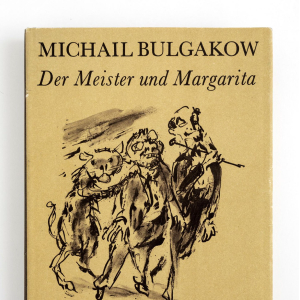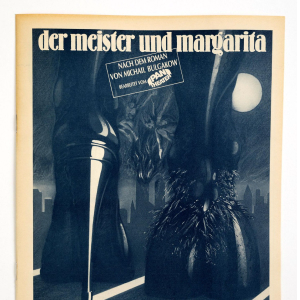


It is assumed that this is where the main characters of the novel The Master and Margarita first met: ‘She turned off Tverskaya into the side-street and looked behind her. Well, it’s Tverskaya you know? Thousands of people were walking along Tverskaya, but I give you my word, she saw only me and she did not look alarmed, but rather as if she were ill.’ Not far from here in one of the houses at the start of Bolshoy Gnezdnikovsky lane, the first meeting between Bulgakov and his third wife possibly took place.
In February 1929, Bulgakov met his future third wife at a dinner party at E. Nirnzee’s house (No. 10). ‘At the table sat an interesting lady with a beautiful haircut, Elena Sergeevna Nurenberg, married name — Shilovskaya,’ remembered L. Belozerskaya, ‘she soon became my lady friend and began to come to our home often and on an inform basis’. According to Elena Bulgakova herself, the meeting with Bulgakov did not come around without some, ‘sorcery’. ‘It was a fast, usually fast, love, on my part anyway… Some fastening came loose on my sleeve… I asked him to tie it for me and he always swore that this was some kind of sorcery, that I had tied him to me for life.
Point on the map
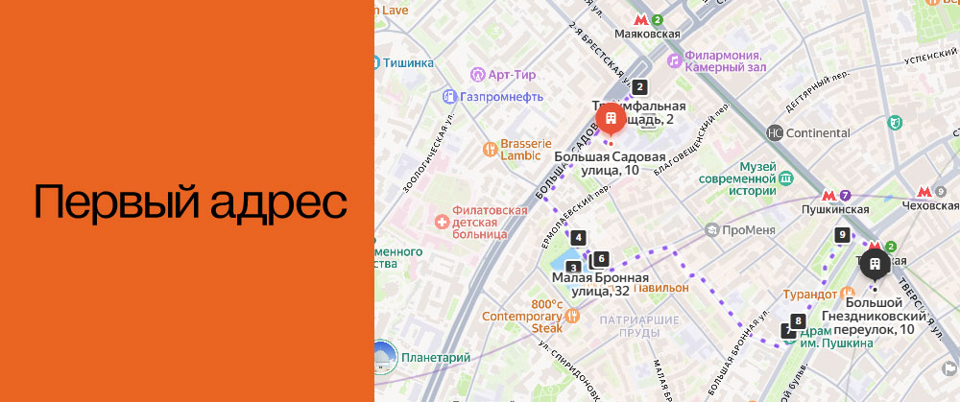
This map shows where the address sits and how it is tied into the project routes.
Routes
This point belongs to one or more routes. Open them as sequential walks rather than isolated cards.
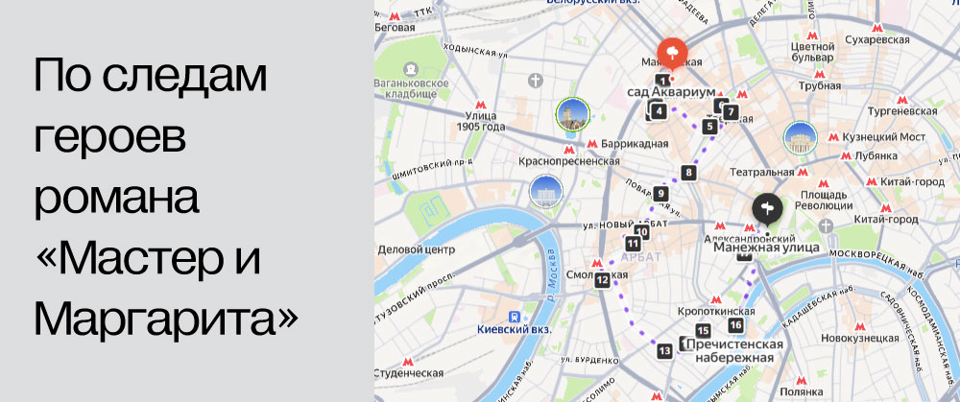
In the footsteps of the characters of The Master and Margarita
- Stop 8
- 5,52 km
- 4,5 h
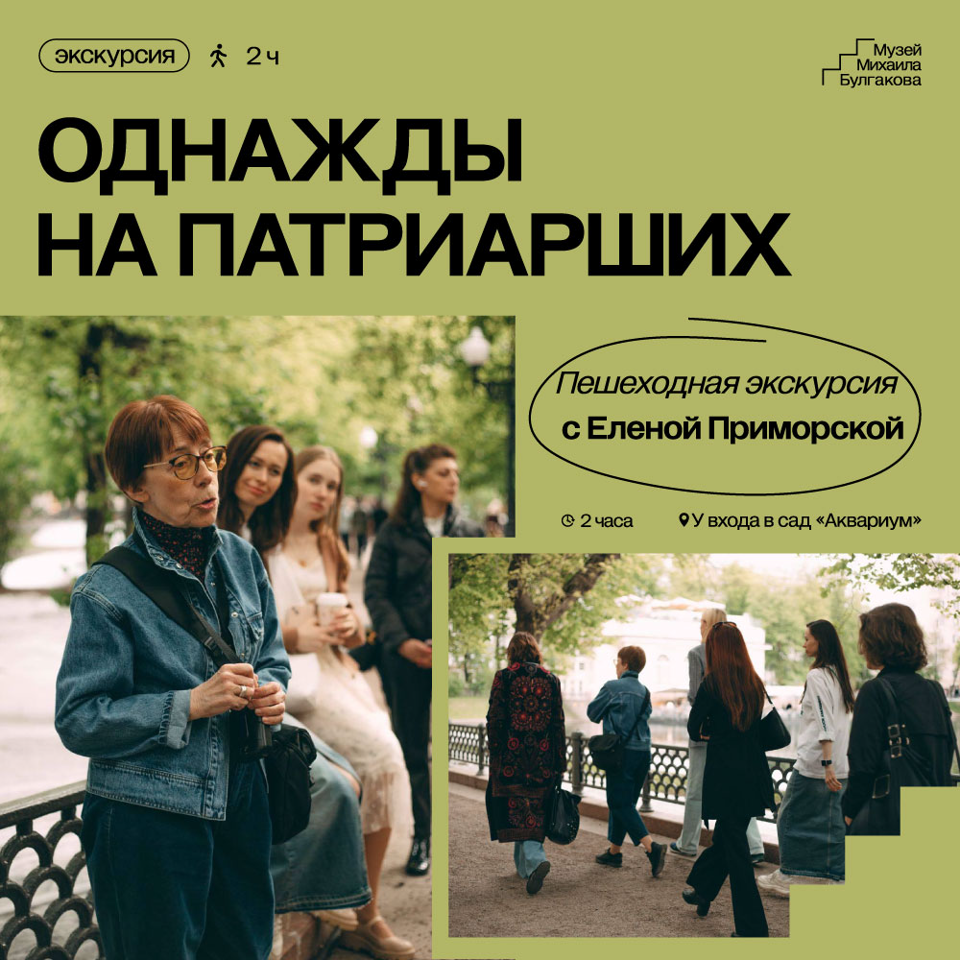
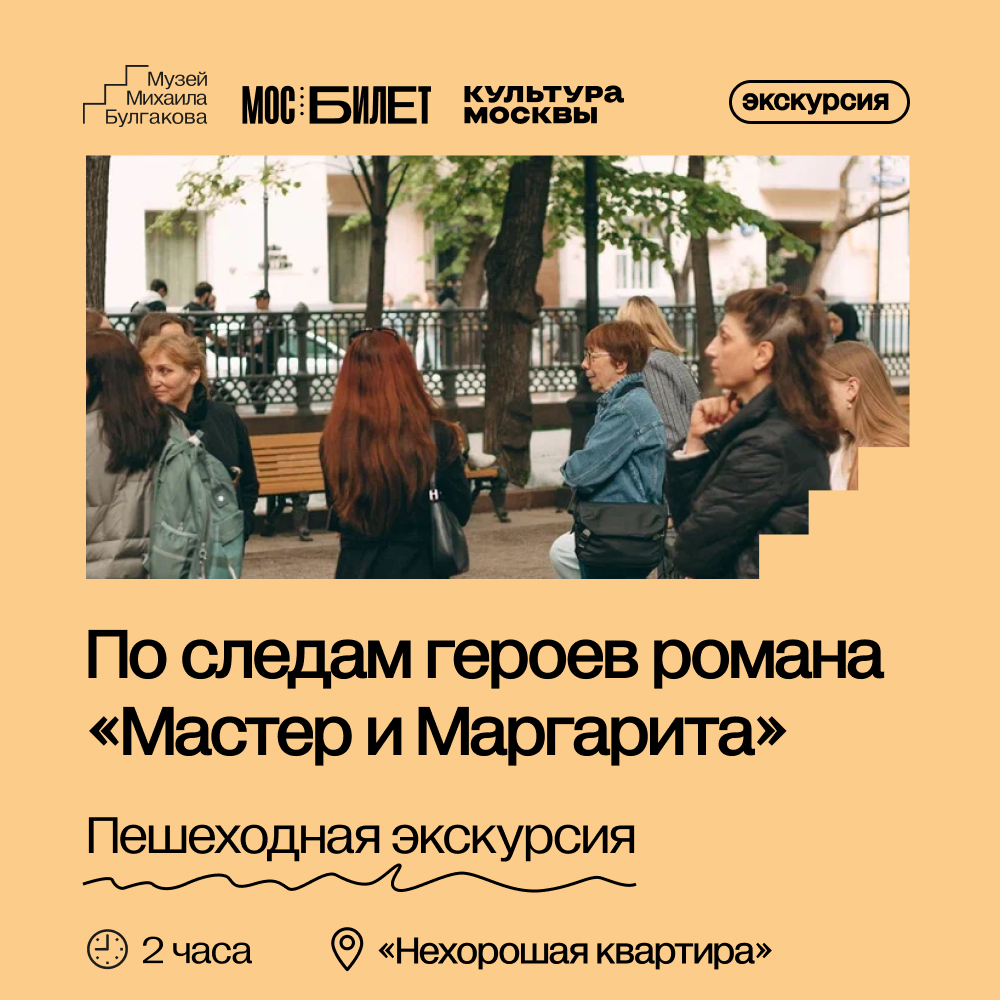
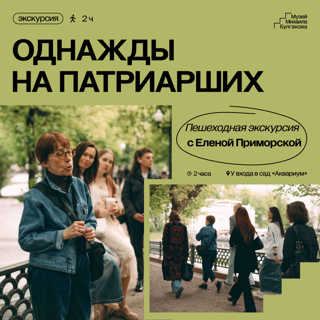
Daily life in Moscow in the 1920s and 1930s plays an important role in the multi-layered novel, The Master and Margarita — it is not simply a background for the fantastical events and the characters’ unusual adventures. The novel, addressed to Bulgakov’s contemporaries, describes the lives of Muscovites in detail, with the arguments arising in communal flats, the issue of flats, the spy scare, the invisible but tangible atmosphere of the Great Terror and so on. The events of the novel take over the entire centre of Moscow, and Bulgakov was almost always very precise in the details – the exceptions include only a few addresses (Margarita’s house, the Dramlit house, Stravinsky’s clinic etc.). Bulgakov’s contemporaries would easily recognize their city in the other details, had the novel been printed at that time. Since then, the city has changed a lot – some houses have been demolished, some have been rebuilt unrecognizably, but through the layers, it is possible to glimpse Bulgakov’s Moscow. Following in the footsteps of Bulgakov’s characters, you can feel Ivan Bezdomny’s horror after the death of Berlioz at Patriarch’s Ponds, his desperation in Herzen’s house, the scale of Satan’s ball in Spaso House, the eccentricity of Behemoth’s antics in the Torgsin on Arbat, and much more. The route begins at the Aquarium Garden, not far from Woland’s ‘unpleasant flat’, runs across Tverskoy Boulevard, takes in the lanes around Arbat and ends at the Alexandrovsky Garden, where Azazello and Margarita met.
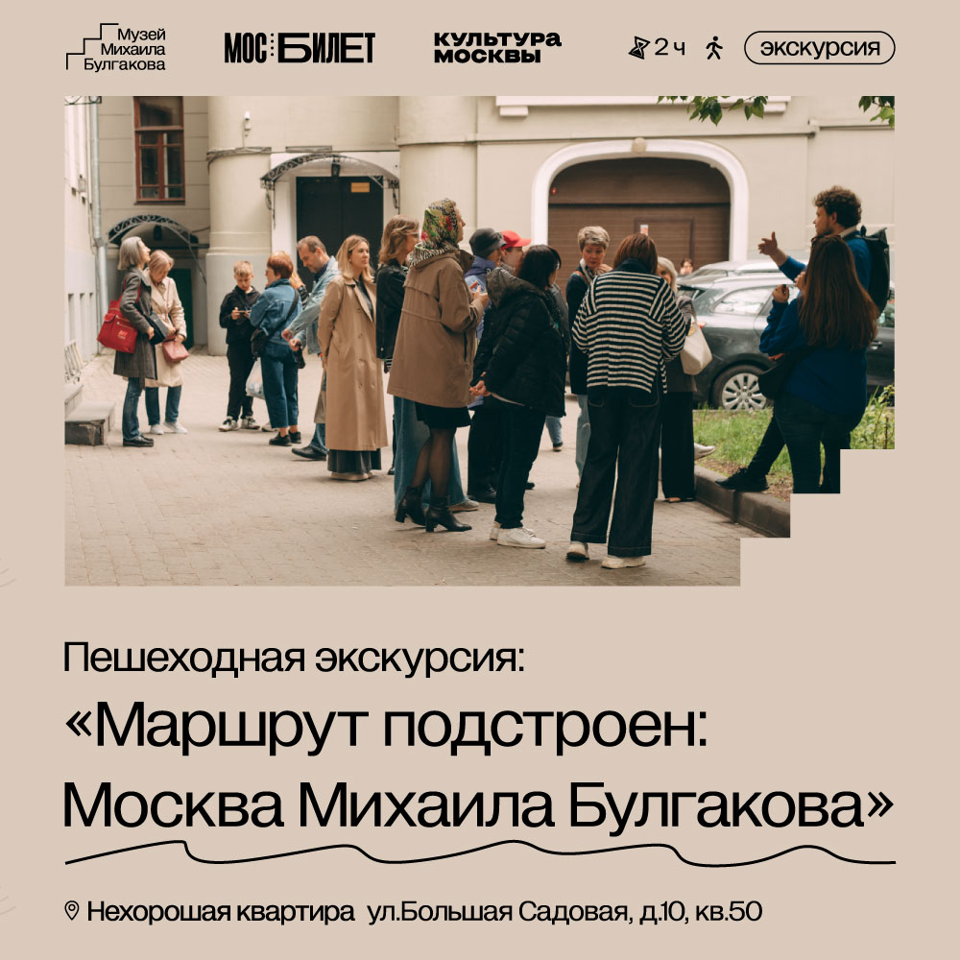
First address
- Stop 11
- 2,1 km
- 1 h
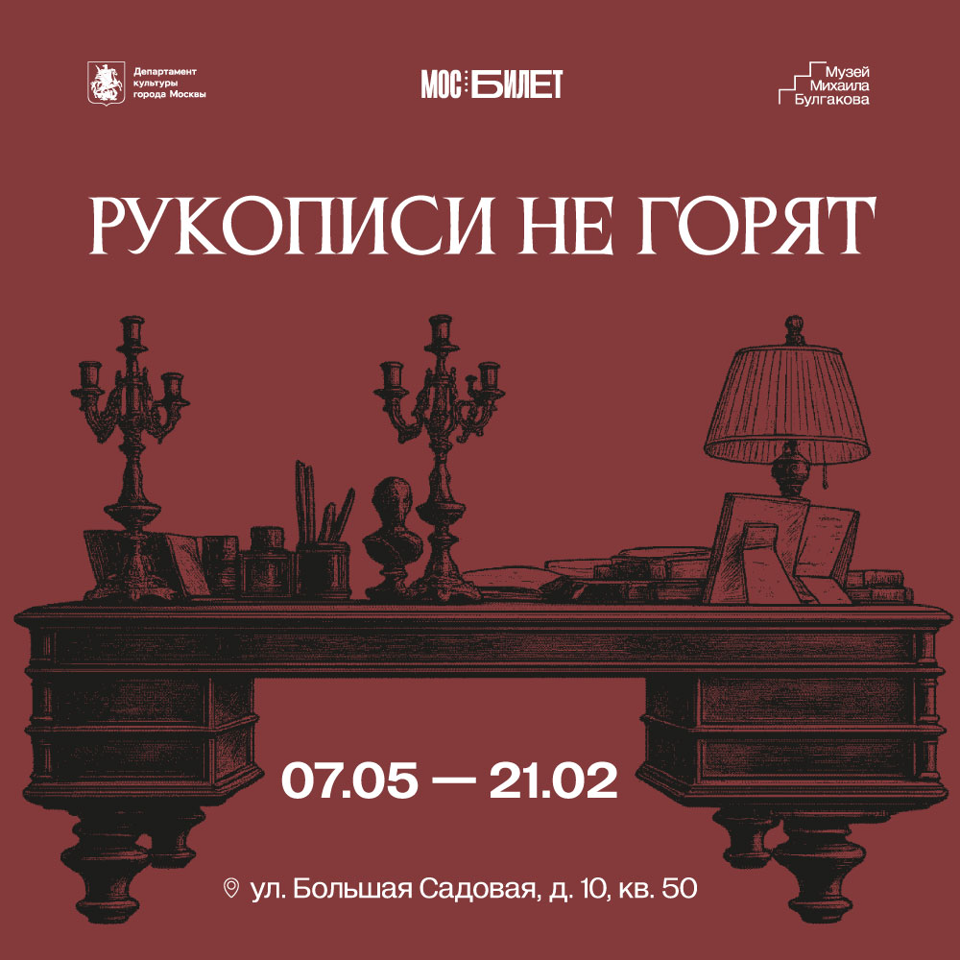
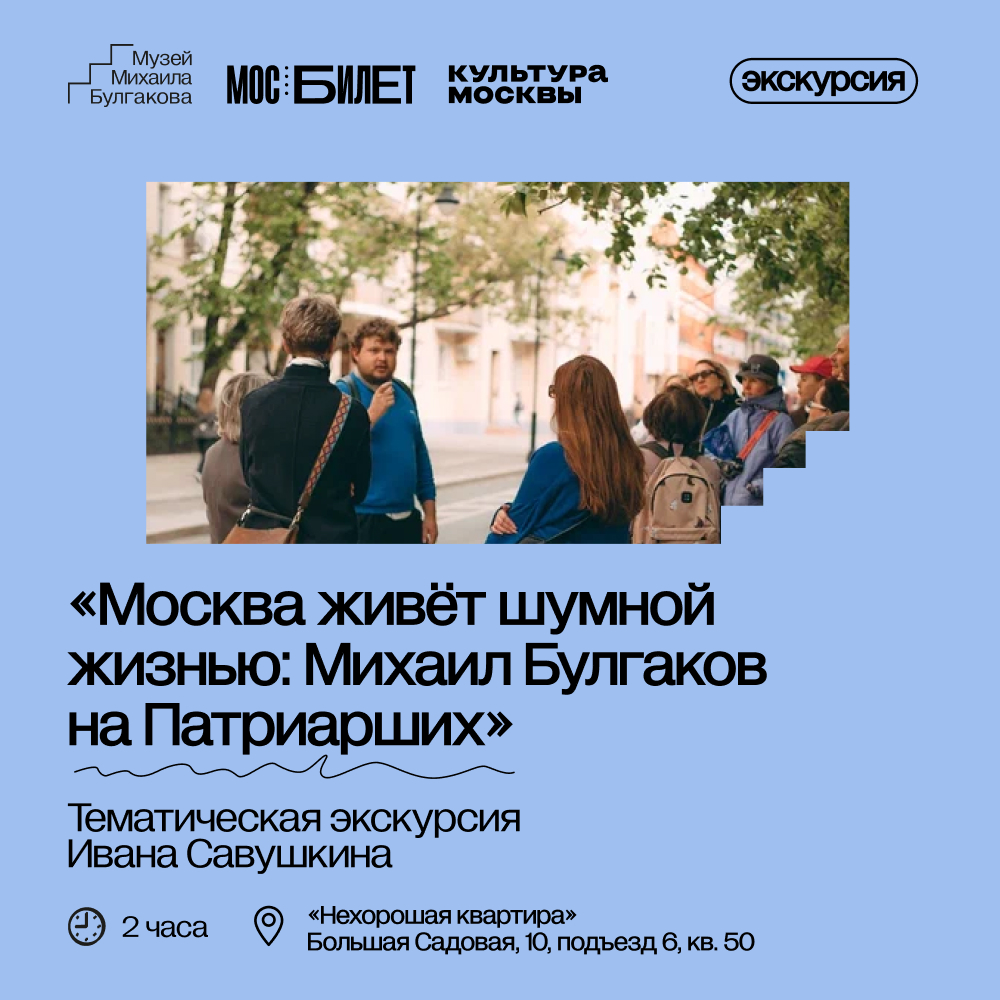
The route encompasses sites of literary and biographical significance in the life of Bulgakov, centred around the environs of Patriarch’s Ponds. \tAt the end of September 1921, Bulgakov arrived in Moscow with the intention of becoming a writer – his first address was flat 50 in house 10 on Bolshaya Sadovaya Street. Bulgakov’s first three years in Moscow were closely connected with the region around the Patriarch’s Ponds. The Patriarch’s Ponds are not only important in Bulgakov’s biography, but also in his works – this is where the events of The Master and Margarita begin. In the novel, Woland and his retinue live on Bolshaya Sadovaya, the characters in the tale The Spiritual Séance inhabit 32 Malaya Bronnaya, and so on.