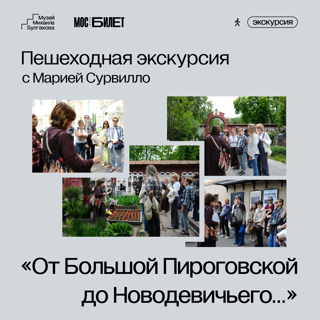


The route encompasses sites of literary and biographical significance in the life of Bulgakov, centred around the environs of Patriarch’s Ponds. \tAt the end of September 1921, Bulgakov arrived in Moscow with the intention of becoming a writer — his first address was flat 50 in house 10 on Bolshaya Sadovaya Street. Bulgakov’s first three years in Moscow were closely connected with the region around the Patriarch’s Ponds. The Patriarch’s Ponds are not only important in Bulgakov’s biography, but also in his works — this is where the events of The Master and Margarita begin. In the novel, Woland and his retinue live on Bolshaya Sadovaya, the characters in the tale The Spiritual Séance inhabit 32 Malaya Bronnaya, and so on.
Route map
The route is shown on a dedicated map so you can see the full walk and jump straight to any stop.
Route stops
Open the stops in order: each page keeps its own address, context, and link back to the route.
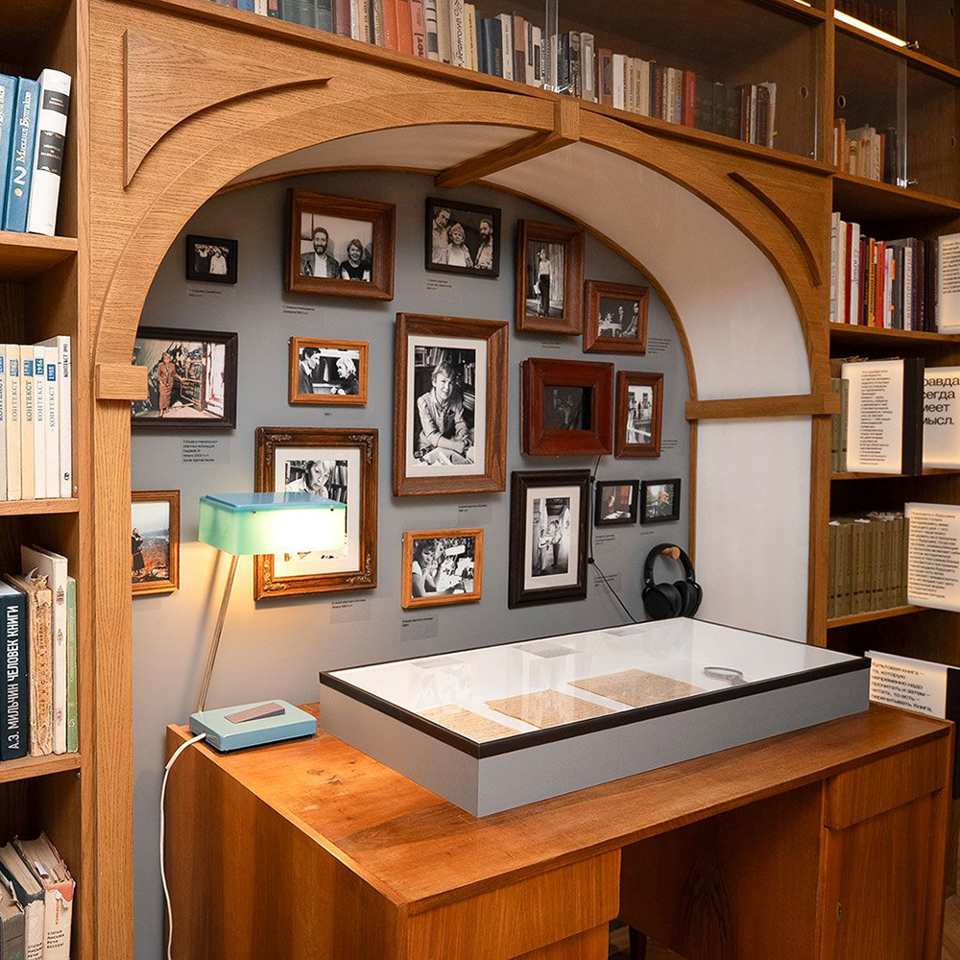
Mikhail Bulgakov Museum
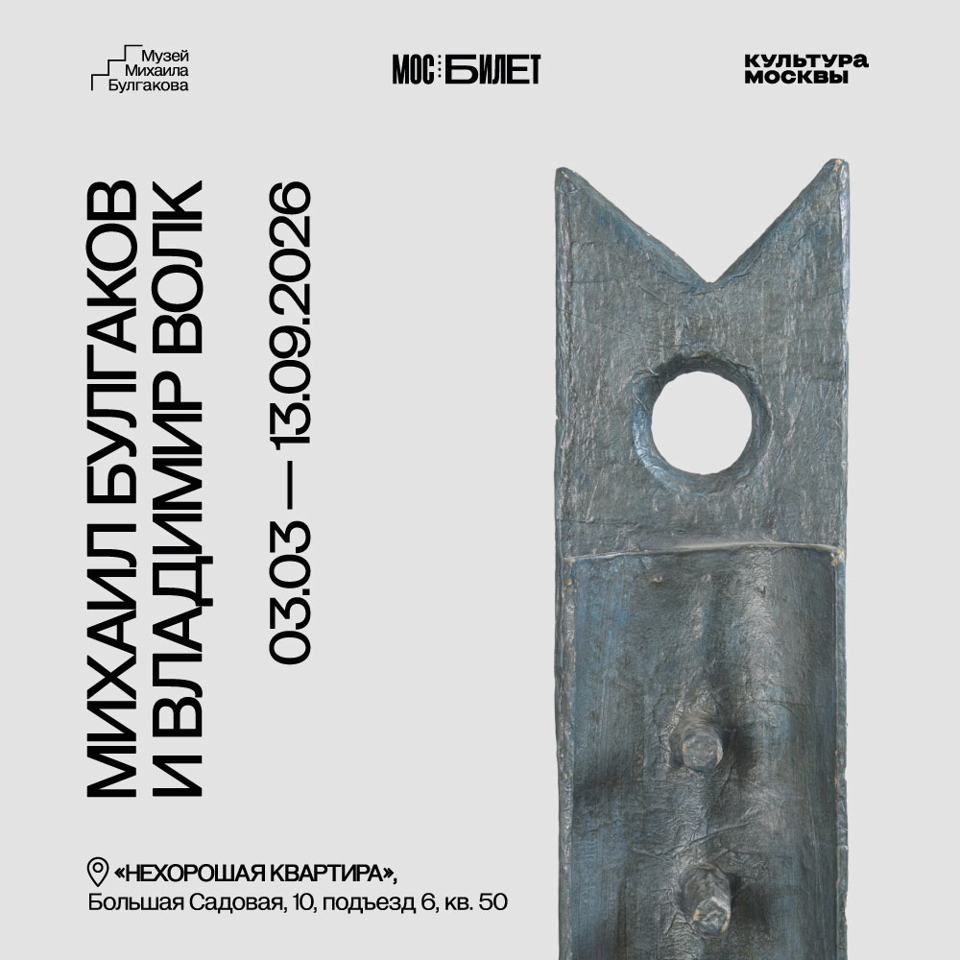
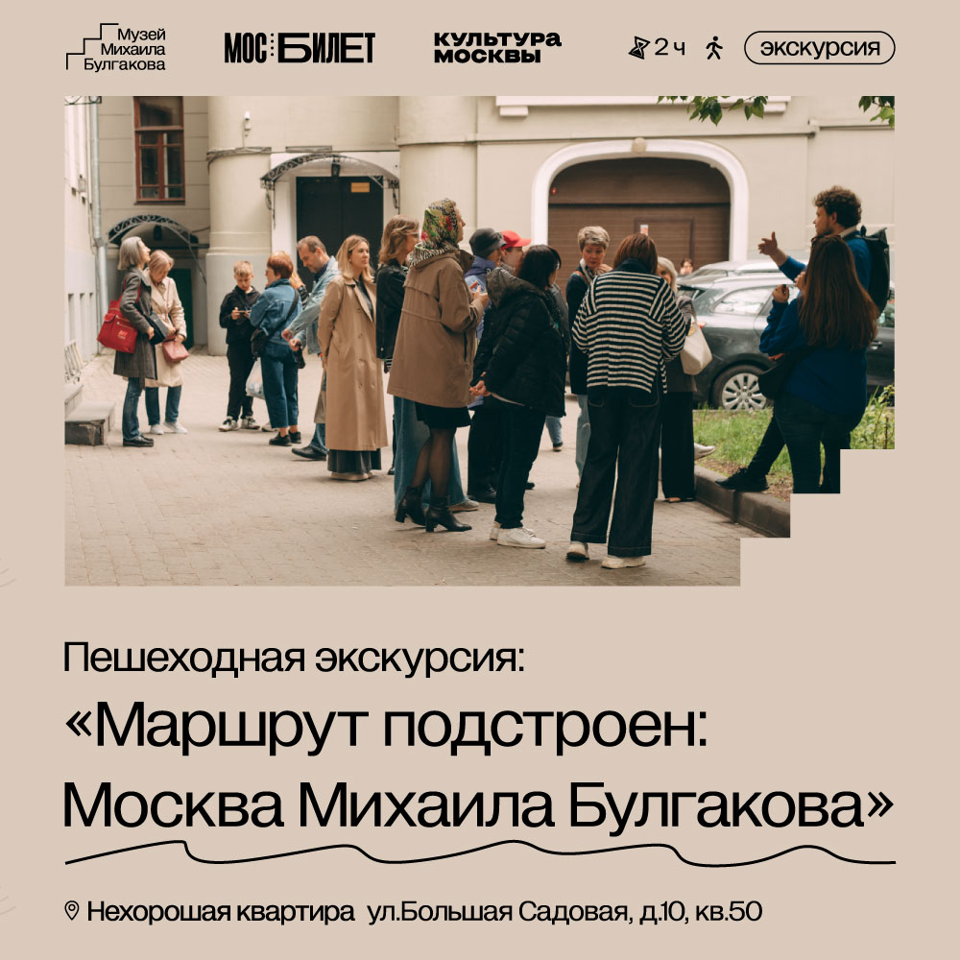
10 Bolshaya Sadovaya Street, flat 50
- Mayakovskaya
- Bulgakov's personal addresses
- Prose
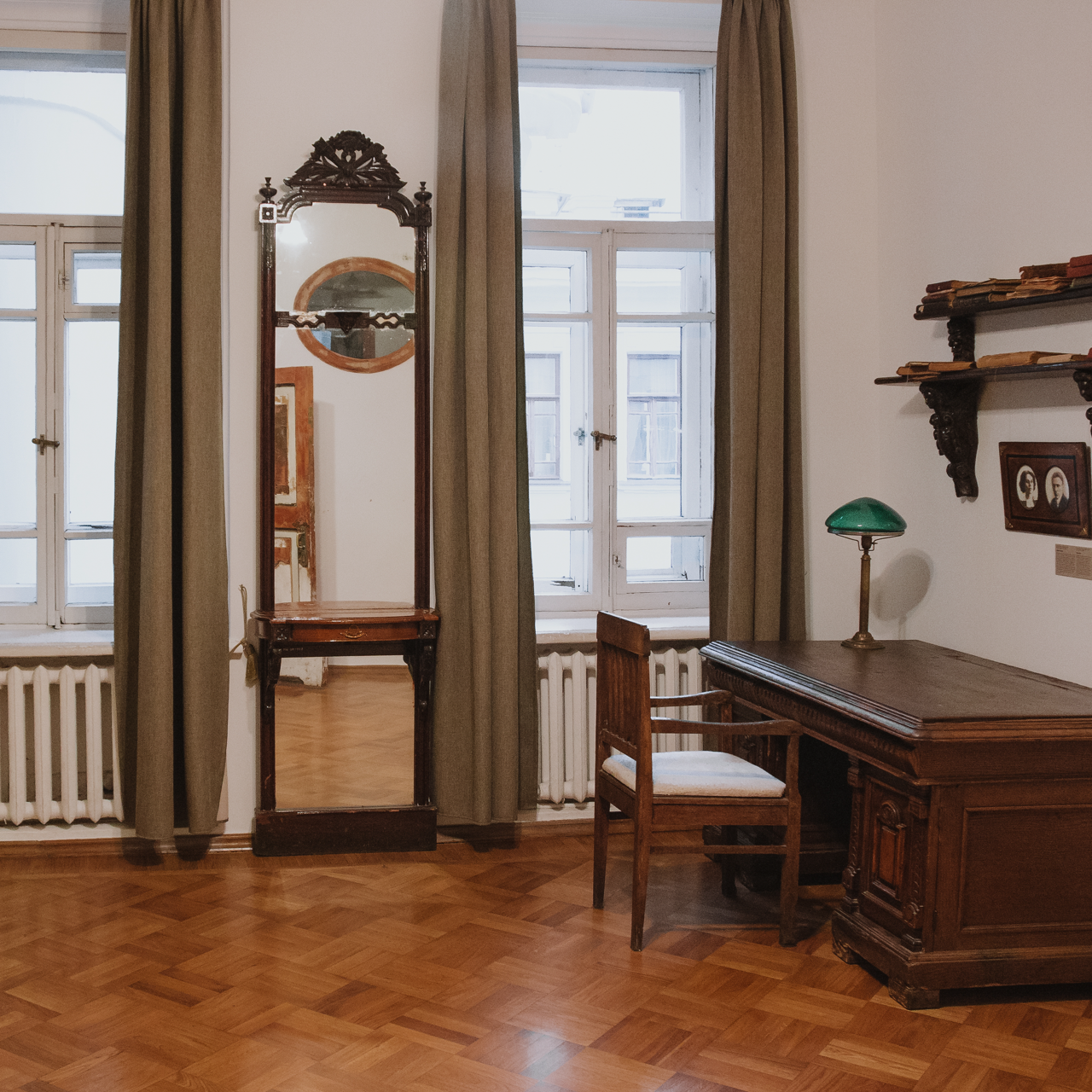
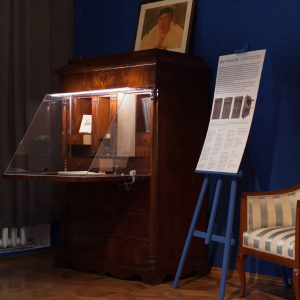
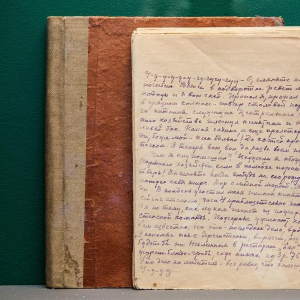
In this flat, which is most famous for being the place where the events in the novel The Master and Margarita unfold, Mikhail Afanasevich Bukgakov lived from autumn 1921 to summer 1924. In November 1924, he deregistered himself from his living quarters and left for good. After the revolution, Ilya Pigit’s flat block was nationalised and workers were settled in it. Sixteen people (including the famous Annushka) lived in flat 50 together with the writer and his wife T. Lappa. Here Bulgakov wrote his novel The White Guard and the short stories Diaboliad and The Fatal Eggs, as well as many essays and satirical pieces. The rowdy inhabitants of the communal flat tormented Bulgakov and hindered his work. Bulgakov made this telling entry in his diary in October 1923: ‘Today they started heating the flat for the first time. I spent the whole evening sealing the windows. The first night of heating was marked by the fact that the famous Annushka left the kitchen window wide open. I have positively no idea what to do with the scoundrels who live in this flat.’ The story No. 13 – Elpit-Rabkommuna House is dedicated to the very house itself, and the scandalous neighbours became literary figures. For example, the famous Annushka – who caused Berlioz’s death (The Мaster and Margarita) – actually lived in flat 50 and the characters of Shvonder (Heart of a Dog) and his accomplices were taken from real members of the worker’s commune in house 10 with whom Bulgakov had to deal with on more than one occasion. Although the writer moved in autumn 1924, the famous house remained a constant feature in his writing. The dual life of Maksudov from the late autobiographical novel Theatrical Novel (1936) – spending his days at an uninteresting job and his nights at his writing desk – was thought up by Bulgakov from his memories of the hated communal flat. Woland and his retinue became the last inhabitants of the ‘unpleasant flat’.
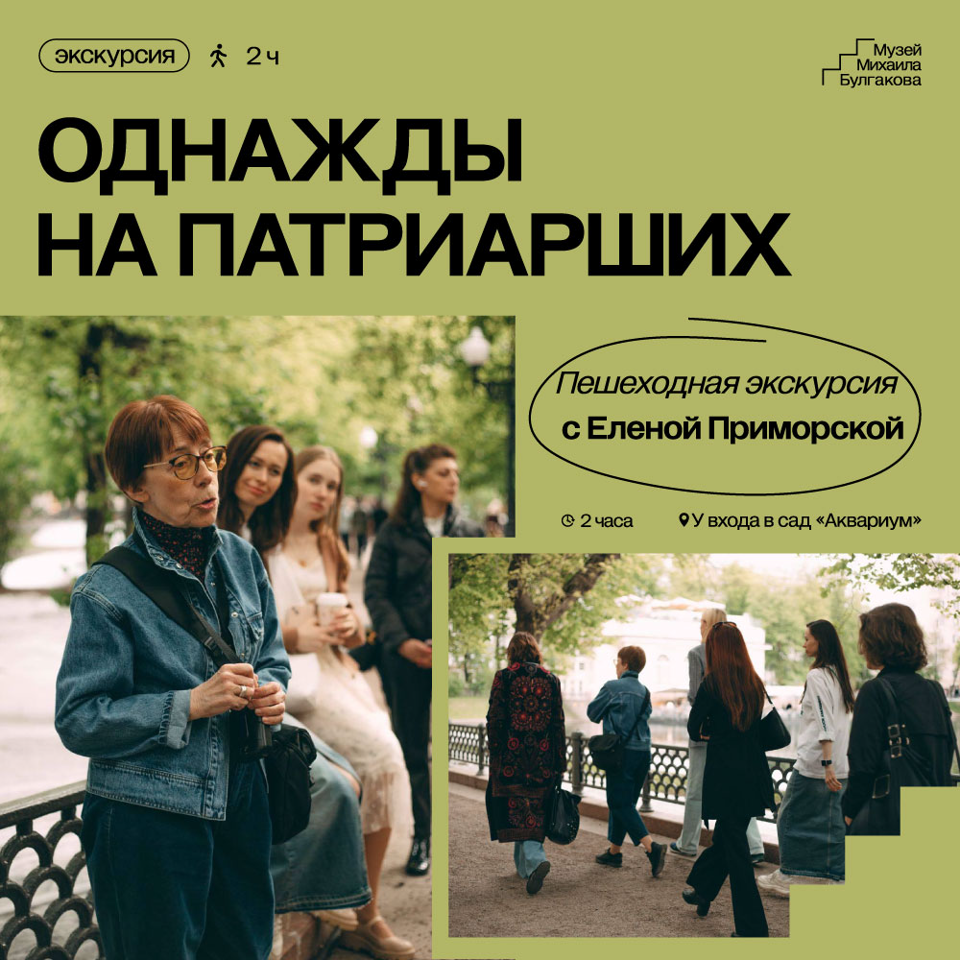
From 1911, the Nikitin brothers’ circus was based in the Garden, which was mentioned in the short novel Heart of a Dog – it was here that Dr. Bormenthal took Sharik. In 1926-1936 the Moscow Music Hall was located in the Garden (the building has not survived and the Theatre of Satire stands in its place). The Aquarium Garden and Music Hall probably provided inspiration for the Summer Garden and Variety Theatre in The Master and Margarita. It was there that Woland put on the famous black magic show. Bulgakov saw the Aquarium Garden every day through the kitchen window of the communal flat in house 10 on Bolshaya Sadovaya. In the 1890s, the first Moscow electrical exhibition opened on the site of the future garden and shortly after, the owner of the garden, S. Malkiel, rented it out to entrepreneurs (M. Lentovsky, F. Tomas and others), one of whom was Charles Aumont, and in 1898, the garden was named the ‘Aquarium Garden’. Entertaining and cultural events were often held here and visitors could go up in a hot-air balloon, visit a photographer’s studio, an ice rink, a shooting range, a bowling alley and also the opera and theatre. The Garden is mentioned numerous times in Bulgakov’s works. In The Fatal Eggs, ‘In the Aquarium Garden, ablaze with neon advertisements and shining, half-naked women, the writer Lenivtsev’s revue Sons of Chickens was being played to great applause amongst the greenery of the open-air stage.’ In The Master and Margarita, Ivan Varenukha encountered Woland’s retinue in the lavatories in the Garden. The Garden is even mentioned in some of Bulgakov’s journalism (Chanson d’été and Travels in Crimea).
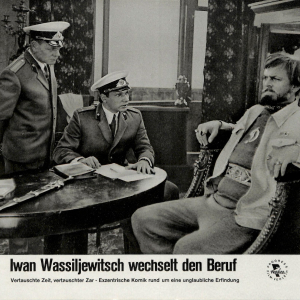
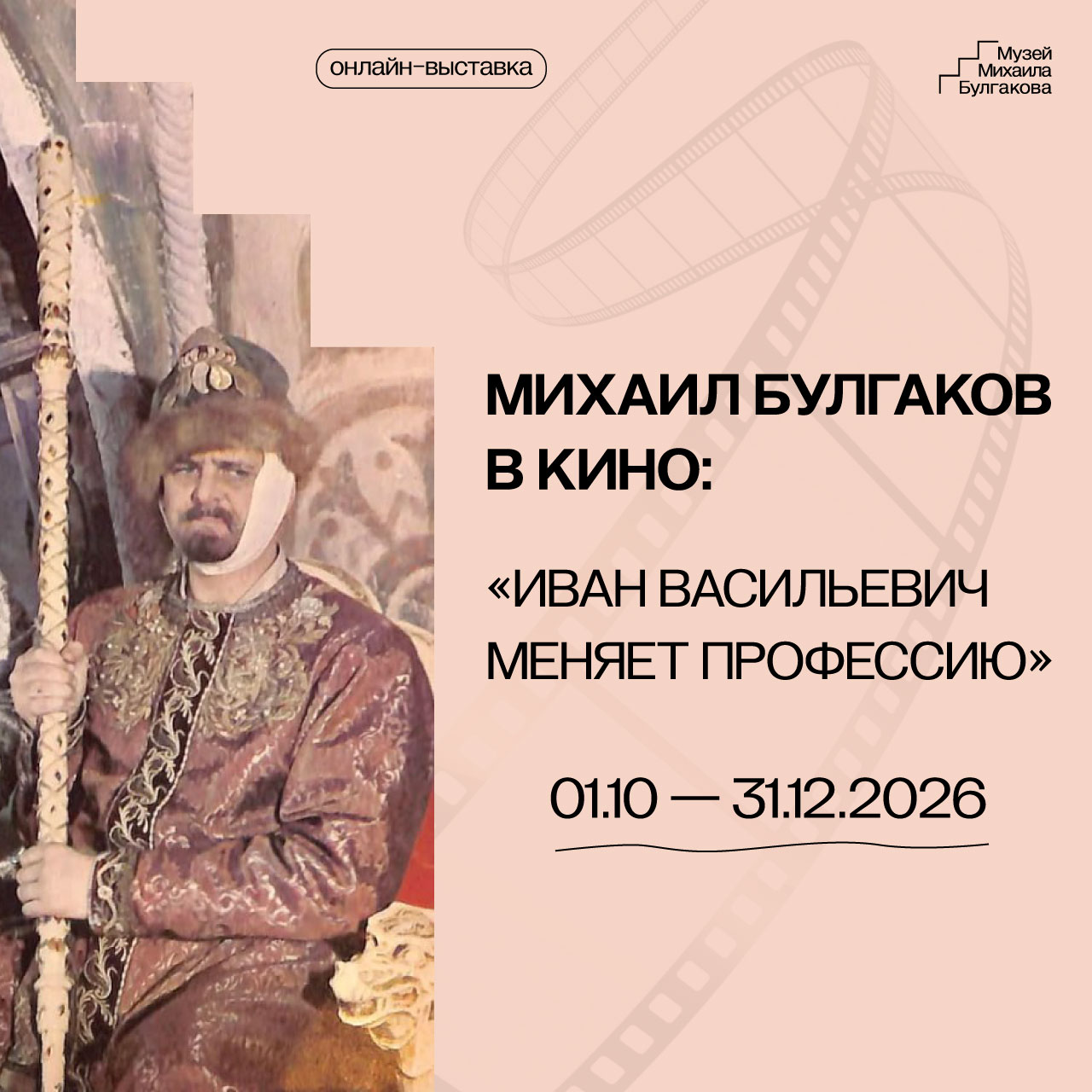
In 1934, Bulgakov signed an agreement with the Theatre of Satire on the play Beatitude, which was subsequently reworked into the comedy Ivan Vasilevich (adapted for screen in 1973 by L. Gaidai). At that time, the Theatre of Satire stood on the opposite side of the square. In 1974, the old theatre building was demolished. The fantastic dual work of Beatitude and Ivan Vasilevich was written by Bulgakov from 1929 to 1935. According to the writer’s third wife, Elena Bulgakova, the comedy about Moscow in the year 2222 did not impress the artists at the Theatre of Satire: ‘1934. On 25th April, Mikhail read Beatitude in the Satire Theatre. The reading was flat. They want it to be changed… They have some kind of funny play with Ivan the Terrible in mind.’ At the end of 1935, the artists at the Theatre of Satire were much more enthusiastic about the play Ivan Vasilevich, and after the Main Repertoire Committee gave its approval, rehearsals began. However, the waves around the prohibition of The Cabal of Hypocrites and the anti-Bulgakov campaign in the press caught up with Ivan Vasilevich – E. Bulgakova recalled sensing the theatre’s reluctance to stage the comedy at the rehearsals. On 13th May 1936, the show was banned after the full-dress rehearsal – at the end of the rehearsal, Veniamin Furer (Head of the Department of Cultural Enlightenment of the Moscow Committee of the All-Union Communist Party) gave some laconic advice: ‘I would not advise you to put it on’.
The novel The Master and Margarita famously begins here. This is a very popular area for strolling – once for the writer and his friends, and now for Bulgakov’s fans. From 1932 to 1994 the ponds were known as the Pionersky Ponds Historically, this area was known as Goat Marsh. In the seventeenth century, Patriarch’s settlement appeared here. Patriarch’s Ponds were originally three ponds ordered by Patriarch Ioakim in 1683-1684 to farm fish for his table. In the first half of the nineteenth century, they were filled in, leaving one decorative pond around which a square was established. Patriarch’s Ponds were one of Bulgakov’s favourite places in Moscow and he had a great number of stories connected to them. According to L.E. Belozerskaya, the writer discussed important issues at Patriarch’s Ponds (‘One especially intimate conversation in which M.A. – a closed person – was extremely open bought me over and changed my attitude on single life’).
This is the supposed place of MASSOLIT Chairman Mikhail Berlioz’s death in The Master and Margarita: ‘And right then a tram came hurtling along, turning down the newly-laid line from Ermolaevsky to Bronnaya. The tram went over Berlioz and a dark, round object was thrown out under the fence of Patriarch’s Path onto the cobbled slope. It was the severed head of Berlioz.’ “Are you looking for the turnstile, citizen?” inquired the checked type in a cracked tenor. ‘Come this way!” The precise location of the fateful turnstile remains a mystery for fans of the novel to this day. Having decided to contact the bureau of foreigners, Berlioz headed for the telephone booth on the corner of Ermolaevsky Lane and Malaya Bronnaya Street. By the time the literary man was approaching the turnstile, the tram had already turned and was moving along Bronnaya – so the turnstile was not on the corner but somewhere close further along the street. The location of the tramlines at Patriarch’s Ponds remains to be explained. We know that there was no passenger tram line here, although in numerous publications about Bulgakov and his works there is information about a temporary freight line and about an unofficial depot used to regulate the traffic on the main lines.
The bench on which Woland, Berlioz and Bezdomny had a conversation in the novel was probably located at the beginning of the path running along Malaya Bronnaya – roughly opposite house 32. ‘There, by the very exit onto Bronnaya, the same citizen who, in the sunlight, had earlier formed himself out of the thick heat stood to greet the editor.’ In The Master and Margarita, benches are places where the characters meet with dark powers on more than one occasion. Azazello sat next to Margarita in the Alexandrovsky Garden. During his conversation with Woland, the buffet manager Sokov fell from a bench. Nikolay Ivanovich shared this fate, falling from the bench by Margarita’s house after the ‘conversation’ with his witch neighbor. The on-duty agent who was smoking on a bench in the stairwell of house 302-bis was scared by Margarita and Azazello. A ‘low bench’ figured in Woland’s transformed room… In the epilogue, benches located by Patriarch’s Ponds and by Margarita’s house are mentioned again.
On the fifth floor of this house lived Bulgakov’s acquaitances Vera and Ivan Kreshkov. At the writer’s suggestion, they once summoned spirits at their ‘three-legged table’. Bulgakov described this evening in the satirical tale The Spiritual Séance (1922). Bulgakov’s first wife Tatyana Lappa remembered the Kreshkov family whom they befriended at the beginning of the 1920s: ‘Her husband Ivan Pavlovich and her lived at Malaya Bronnaya, house 30… Vera Fedorovna, it seems, was the daughter of a priest and Ivan Pavlovich was the son of a civil servant from Vladikavkaz. He taught mathematics in the Military Academy in Petrovsky Park. She was so… formidable’. Once, Bulgakov proposed something to his wife: ‘Do you know what? Let’s have a spiritual séance at the Kreshov’s place tonight!’ A lover of pranks and hoaxes, Bulgakov put his wife up to knocking the table when he touched her leg at the right moment. The unkind and extremely derisive description of the hosts in the tale, The Spiritual Séance, offended the Kreshkovs and they cut off contact with the Bulgakovs.
On 11th December 1928, the premier of Bulgakov’s play The Crimson Island took place, which was staged by Alexandr Tairov (the famous Russian and Soviet avant-garde theatre producer and director, founder of the Chamber Theatre). For half a year, the play lay with the Main Repertoire Committee, but was then approved for staging anyway. The show was a great success, but was brought to a close in the summer of 1929. The approval of the staging of a play after half a year, when the author had already mentally written it off as lost in the bowels of the Main Repertoire Committee, was a real miracle. All the more so since its main theme was the freedom of the writer and the main target for Bulgakov’s satire was the Main Repertoire Committee itself. Behind the character of Savva Lukich was hidden the easily recognisable censor V. Blum, who was enraged to identify himself quickly in the extremely repellent character. The amazed Bulgakov wrote to his friend Evgeny Zamyatin on 27th September 1928, ‘Another feeling has joined the love that I have for you – awe. You congratulated me two weeks before the approval of The Crimson Island. That means you’re a prophet. I don’t know what to say about the approval. I wrote The Run and submitted it, but The Crimson Island was approved… Mystical’.
After the revolution, the main literary organisations of Moscow were located in the house in which A. I. Herzen was born – the All-Russian Union of Writers, the Russian Association of Proletarian Writers and others. This house is depicted in The Master and Margarita as the Griboyedov House in which the fictitious organisation MASSOLIT is based. In Bulgakov’s era, the Union of Writers and other literary organisations played an enormous role in the lives of literary people, significantly regulating their publications and therefore their livelihoods, not to mention their access to the public. Exclusion from the Union was a form of dealing with unwanted authors and voluntary exit was a strong form of protest, which few dared to carry out. In 1929, a great campaign against Evgeny Zamyatin and Boris Pilnyak was lauched after the publishing of their novels We and The Red Tree abroad. Zamyatin was excluded from the Union of Writers, his plays were taken out of theatre repertoires and he was forbidden from publishing. His name, if mentioned at all, only appeared in negative contexts. As a protest against the witch-hunt against his friend, M. Bulgakov submitted his notice on leaving the Union of Writers on 2nd October 1929. On 8th October, A. Yakovlev told Zamyatin in a letter, ‘Veresaev recommended that I leave the administration under the pretext of illness. I don’t think this is a way out. If one is to leave, then it’s as a protest. The exits from the Union – yours, Akhmatova’s, Bulgakov’s – are a moral blow to everyone’.
In the novel The Master and Margarita, the poet Ryukhin addresses his monologue to this bronze Pushkin. The monument is the work of A. Opekushin and was erected at the top of Tverskoy Boulevard in 1880. In the 1950s, it was moved to its current location on Pushkinskaya Square. Until 1937, the square was known as Strastnaya Square. The Strastnoy Monastery, established in 1654, was located here. When the centenary of Alexander Pushkin’s death was being commemorated across the country in 1937, the monastery was demolished and the square was renamed Pushkinskaya Square. Practically all spheres of Soviet culture were involved in the commemorations. Pieces were written, films made and plays and opera performances of Pushkin’s works and about the man himself were put on. Mikhail Bulgakov too wrote a biographical play about Pushkin with a co-author, Vikentiy Veresaev, in the middle of the 1930s. Although many theatres showed an interest in staging it, the play was never performed in Bulgakov’s day. Many researchers see autobiographical motifs in the drama about Pushkin. Bulgakov saw parallels with his own fate in the tragic confrontation between the poet and the authorities.
The probable place of the first meeting between the Master and Magarita
The archway of house 17 onto Tverskaya Street
- Tverskaya
- Private life
It is assumed that this is where the main characters of the novel The Master and Margarita first met: ‘She turned off Tverskaya into the side-street and looked behind her. Well, it’s Tverskaya you know? Thousands of people were walking along Tverskaya, but I give you my word, she saw only me and she did not look alarmed, but rather as if she were ill.’ Not far from here in one of the houses at the start of Bolshoy Gnezdnikovsky lane, the first meeting between Bulgakov and his third wife possibly took place. In February 1929, Bulgakov met his future third wife at a dinner party at E. Nirnzee’s house (No. 10). ‘At the table sat an interesting lady with a beautiful haircut, Elena Sergeevna Nurenberg, married name – Shilovskaya,’ remembered L. Belozerskaya, ‘she soon became my lady friend and began to come to our home often and on an inform basis’. According to Elena Bulgakova herself, the meeting with Bulgakov did not come around without some, ‘sorcery’. ‘It was a fast, usually fast, love, on my part anyway… Some fastening came loose on my sleeve… I asked him to tie it for me and he always swore that this was some kind of sorcery, that I had tied him to me for life.
The writer often went to Nirnzee’s famous house (named after its architect and owner) as the editorial section of the Moscow office of the Berlin-based newspaper Nakanune, in which he had works published, was located on the ground floor. The final scene of the short story Diaboliad (1924) unfolds on the rooftop of this building. Bulgakov’s stories and essays appeared in practically every edition of the paper from 1922-1923. Nonetheless, the writer was bored by working for a publication which had an openly pro-soviet slant. In September 1923, he bitterly wrote in his diary, ‘Oh, later it will be absolutely necessary for me to scrape away the dirt from my name. However, I can say one thing with a clean conscience before myself. Dire need forced me to publish in that paper. If it weren’t for Nakanune, neither Notes on the Cuffs nor many other works in which I can truthfully write literature, would have seen the light of day’.