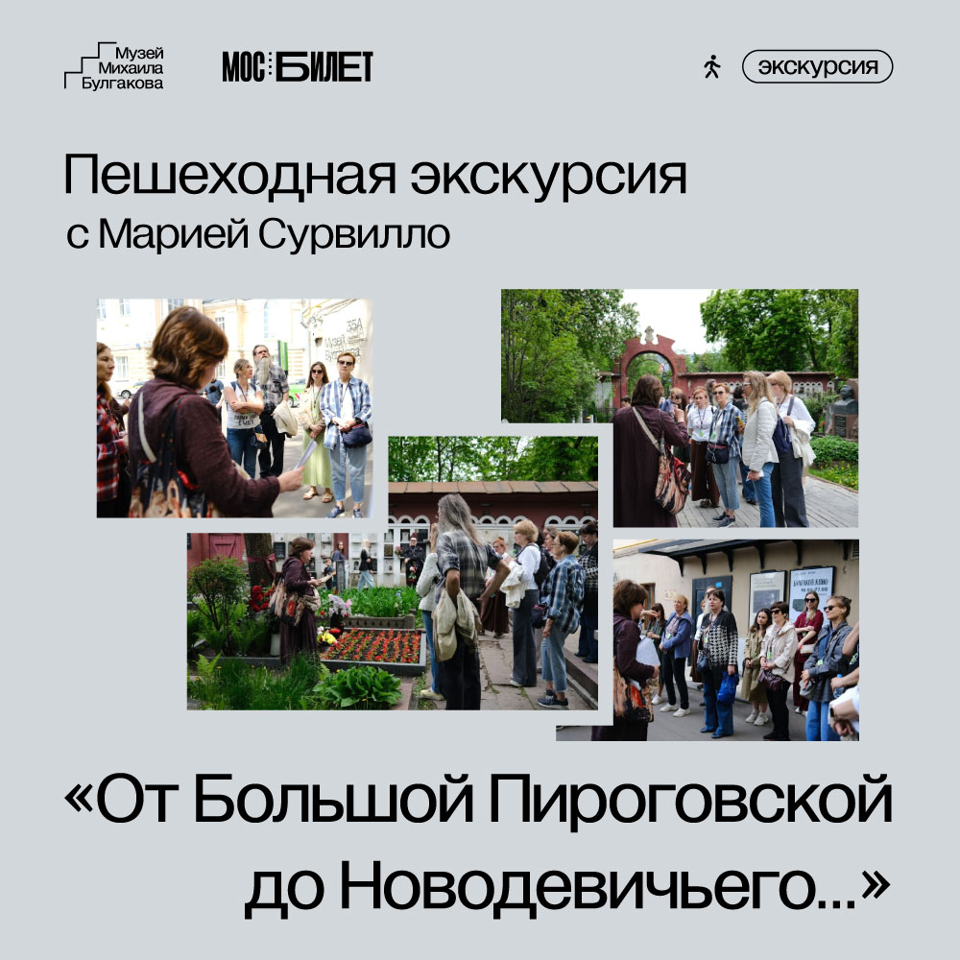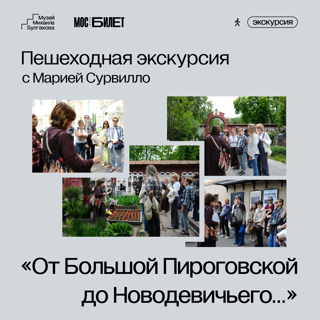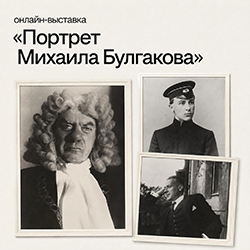

In November 1924, Bulgakov moved away from Bolshaya Sadovaya, and, moving a number of times, lived on Obukhovy (Chisty) Lane, and Maly Levshinsky, until he finally moved to Bolshoy Pirogovskaya Street in 1927. He lived here until 1934 and then moved with his third wife to the first flat he occupied without neighbors, which was also his last, on Nashchokinsky Lane. The writer spent the late 1920s on Prichestenka and the little roads leading onto it — his Muscovite friends N. Lyamin, S. Zayaitsky, S. Shervinsky and others lived here. It was a circle of highly educated, old Muscovite intellectuals, who did not accept the provincial Bulgakov immediately. N. Lyamin, the writer’s close friend, lived on Pozharsky Street. Nearby was the State Academy of Arts, where many of the writer’s friends worked, and Mansurovsky Lane, where S. Topleninov lived, whose house served as inspiration for the Master’s basement.\t \tThe events of the short novel Heart of a Dog (1925) take place around Prechistenka. Bulgakov’s uncle, N.M. Pokrovsky’s, house was on the corner of Prechistenka and Obukhov (Chisty) Lane — it was he who inspired the almost omnipotent Professor Preobrazhensky with his seven-roomed apartment. With this route guide in your hands, you can go into the smallest details and bring this ‘monstrous story’ to life: find the backstreet where Sharik was picked up, discover the shop in which Preobrazhensky bought the Krakow sausage, and much more. The route finishes at Novodevichy Cemetery, where M. Bulgakov is buried.
Route map
The route is shown on a dedicated map so you can see the full walk and jump straight to any stop.
Route stops
Open the stops in order: each page keeps its own address, context, and link back to the route.
It is here, behind the gates with lions, that the ‘monstrous story’ begins (the subtitle of the short novel Heart of a Dog). ‘Ow-ow-ow-ow-ow-ow!.. Oh look at me, I’m dying!.. I’m done for! Done for! The scoundrel in the tall, dirty cap, the chef in the canteen with the nice food at the Central Soviet of the National Economy dashed boiling water over me and scalded my left side. What a brute, and a proletarian at that!.. How was I bothering him? How? I’m hardly going to eat the Soviet of the National Economy out of house and home if I rummage through the rubbish, am I?’. The sick and hungry Sharik suffered like this, lying in the backstreet, until Professor F.F. Preobrazhensky found him here, fed him some sausage and picked him up.
The cooperative store «Tsentrokhoz», which appears in Heart of a Dog, was located on the first floor of this house. This is where Professor Preobrazhensky comes to get Krakow sausage for Sharik. ‘The door of the brightly lit shop across the street banged and out stepped a citizen, not a comrade, most likely a gentleman, appeared… The gentleman confidently crossed the street in the midst of the snowstorm and went into the backstreet.'
The house was built by G. Gellrich in 1911 on the corner of Prechistenka Street and Lopukhinsky Lane. According to some experts on Bulgakov, the writer came to this house to socialise with the artists of the Jack of Diamonds (‘Bubnovy Valet') group – I. Zakharov, A. Muat, B. Takke and others. The house was owned by Jakob Reck, a native entrepreneur who rented out the flats. Some of the most famous of people lived here, amongst whom, Aleksandr Fabergé (son of the celebrated jeweler Carl Fabergé and a lawyer in his company) occupied flats 11 and 12 on the upper floor. In 1920, A. Fabergé emigrated and artists of the Jack of Diamonds group moved into the flats. The writer’s biographers believe that the house’s exterior and interior later served as a model for the appearance (but not the location) of the Kalabukhovsky house from Heart of a Dog, and in The Master and Margarita, Bulgakov gave the vanished host of the ‘unpleasant flat’, Anna Frantsevna, the an altered version of the surname Fabergé – Fuzheré.
At the beginning of the 1920s, the choreographic studio of the American ballerina Isadora Duncan could be found in this house. The celebrated dancer is mentioned in Heart of a Dog when Shvonder, the head of the house committee, comes to Professor Preobrazhensky with the aim of taking over his dining room. His main argument is that, ‘No one in Moscow has a dining room. Not even Isadora Duncan!’.
The Prechistensky fire station building is mentioned in Heart of a Dog. When Sharik is lying in the backstreet, he smells, ‘the smell of onions coming from the Prechistenka fire team. Everyone knows that firemen have kasha for dinner’.\t On his way home, Professor Preobrazhensky, ‘valued his loyalty, and right in front of the fire team… rewarded the dog with a secondly slightly smaller slice’.
The model for the Kalabukhovsky house (Heart of a Dog)
24/1 Prechistenka Street
- Kropotkinskaya
- Private life
- Prose
Bulgakov’s uncle lived here on the bel étage (at those times, the street was known as Kropotkinskaya Street). He was the doctor Nikolay Pokrovsky, who served as the main inspiration for Professor Filipp Preobrazhensky. With him, lived his brother Mikahil Mikhailovich, who was also a doctor. When describing Preobrazhensky’s house, Bulgakov was probably remembering his visits to his uncle on Prechistenka. In Heart of a Dog, as in many other works by the writer, Bulgakov mixed fiction and real life from 1920s Moscow. For example, the story mentions Rykovka and Novoblagoslovennaya vodka, Aida, which was being shown in the Bolshoy Theatre at the time, the Yussems brothers circus show, and much more. Aside from this, Bulgakov very accurately described N. Pokrovsky in the story, right down to external similarities. Just like N. Pokrovsky, Professor Preobrazhensky lived on the corner of Prechistenka and Obukhov Lane, received patients at his home and wore bushy whiskers and a pince-nez. Just like Pokrovsky, Preobrazhensky is faced with having people moved into his home. In the story, the professor famously manages to escape Shvonder and the house committee’s attempts successfully, but Bulgakov’s model was much less fortunate: ‘They’ve moved people into uncle Kolya’s flat despite his protective letters. Uncle Misha has been forced out into a hotel and they’ve moved a couple into his room who have fixed in two lamps, one with one hundred candles, the other with fifty. And they never put them out, neither during the day nor at night’ (from a letter from Bulgakov to his sister Nadezhda on 24th March 1922).
The house in which Mikhail Bulgakov lived in 1924-1926
9 Chisty Lane
- Kropotkinskaya
- Bulgakov's personal addresses
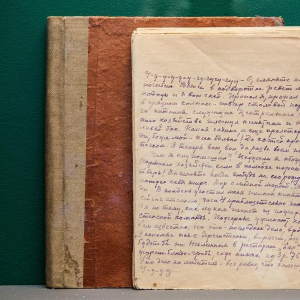
In November 1924, M. Bulgakov and L. Belozerskaya moved to a new flat. The writer lived on the second floor at 9 Obukhov Lane (today – Chisty Lane) until about June 1926. On 7th May 1926, OGPU agents searched the flat, confiscating the manuscript of Heart of a Dog and Bulgakov’s diaries. The outhouse in which Bulgakov lived no longer stands. Bulgakov managed to achieve a lot here – he began to sketch out the play The White Guard (the future Days of the Turbins), wrote Zoyka’s Apartment for the Vakhtangov Theatre, and the short novel Heart of a Dog, and he began to publish, A Young Doctor’s Notebook. In 1925, his connections with the Prechistentsy circle took root, with his friends Nikolay Lyamin, the witty conversationalist Sergey Zayaitsky and others. The flat was searched by OGPU Order No. 2287 on Case No. 45. L. Belozorskaya remembered how he immediately said, ‘Well, Lyubasha, if your armchairs shoot, it’s not my fault. (I bought the armchairs at an unclaimed furniture store for 3 rubles 50kop. apiece). And we both fell about laughing. Perhaps nervously.’ For a few years in a row, Bulgakov wrote letters to higher authorities (to the chairman of the Council of People’s Commissars in June 1926, and to others) and tried to have his two copies of Heart of a Dog and his diaries returned. He asked Gorky for help and corresponded with E. Peshkova. According to E. Bulgakova, his manuscripts were only returned to him in 1929. Different versions of events exist as regards his diaries – according to one version, Bulgakov himself destroyed the diaries as soon as the OGPU returned them (only a few now-published pages were saved), according to another version, the diaries were not returned to the writer and only a few pages miraculously survived the search. From that time on, Bulgakov stopped keeping diaries.
The house in which Mikhail Bulgakov lived in 1926-1927 (the building no longer stands)
4 Maly Levshinsky Lane
- Kropotkinskaya
- Bulgakov's personal addresses
Here, in a small, non-longer standing, detached house, M. Bulgakov and L. Belozerskaya occupied two rooms from the end of June 1926 until August 1927. At that time, Bulgakov worked on the plays The Crimson Island and The Run. Bulgakov’s second wife L. Belozerskaya remembered that they lived in two rooms – one blue and one yellow. The kitchen was shared and the house was completely full of tenants. Friends lived nearby – the Lyamin couple, S. Topleninov, V. Dolgoruky (Vladimirov) and S. Fedorchenko, as a guest of whom Bulgakov listened to Pasternak read verses from his poem Lieutenant Schmidt in 1926, and to many other friends and acquaintances. An endless stream of guests visited the Bulgakovs, where they played pranks and spent their evenings playing charades. Belozerskaya had two cats on behalf of whom Bulgakov left humourous notes to his wife (‘Our lovely papa has moved things around in our comfy flat. We are verrry pleased (and I Anshlag helped, papa almost crushed me when I was riding on the carrrrpet with my legs up in the airrr). Papa is so strong, all alone he dragged me, and is kind, he didn’t shout when he was getting red in the face, and now, mama, I’m sleeping on the sofa.’), and N. Ushakova and V. Dolgoruky even made a book by hand with drawings and poems called Muki-Maki (The Toils of Maka) about the Bulgakovs’ daily life on Maly Levshinsky (Maka was Bulgakov’s nickname at home).
The Topleninovs’ house (Bulgakov’s friends). The house of the Master
9 Mansurovsky Lane
- Кропоткинская
- Prose
The rooms on the lower floor of house 9 on Mansurovsky are generally considered to be the model for the basement where the Master lived in The Мaster and Margarita. Bulgakov’s friends and acquaintances lived here in this house (the Topleninov brothers, S. Ermolinsky and M. Chimishkian), whom he regularly visited. «“Ah it was a golden age,” whispered the narrator with shining eyes, “a completely separated little flat with a sink and running water… And the fire in the stove was always glowing!”» as the Master says about his little basement flat in the novel. From the late 1920s, Bulgakov often came to house 9 on Mansurovsky Lane and stayed in a room with a stove, which was specially put aside for him. S. Topleninov’s wife, Maria Nesterenko described the house in a conversation with M. Chudakova, ‘…six or seven steps led downstairs to the entrance room, where you took you shoes and coats off. To the left was a stove and next to it, a big, white, porcelain sink… you know, most people washed in the shared kitchens and bathrooms, but we had our own basin. In the room, there were two windows and an oval table with chairs around it. It was a Russian stove, which was always stoked. It was warm and everyone said how comfortable our place was.
Anna Kekusheva’s house (possible model for Margarita’s house)
21 Ostozhenka Street
- Kropotkinskaya
- Prose
The famous architect Lev Kekushev built this miniature castle in the Art Nouveau style in 1903 for his wife. Situated two steps away from the Master’s basement and decorated with a multi-faceted turret, this house is considered one of the most likely sources of inspiration for Margarita’s house. From 1935 to 1986, Ostozhenka was known as Metrostroevskaya Street. ‘Margarita Nikolaevna and her husband occupied the entire upper floor of a beautiful house in a garden in one of the lanes near Arbat. It’s a lovely place! Anyone can see it for himself, if he cares to visit the garden. Ask me, I’ll tell you the address and show you the way – the house still stands to this day.’ The gothic style of the building and the mention of the fact that the heroine’s bedroom was in the tower of the house show that 21 Ostozhenka could have been a model for Margarita’s house. The story which occurred within the walls of this ‘castle’ is also interesting: Ekaterina Kekusheva, the daughter of the architect, defied the protests of her family and left the rich household for the Maly Theatre set designer, Sergey Topleninov. Ekaterina and Sergey frequently visited 9 Mansurovsky Lane to see Topleninov’s older brother (this house is believed to be one of the models for ‘the Master’s house’). However, house 21 is located slightly further away from Arbat and there is no garden or fence nearby as described in The Master and Margarita, which allows the search for new addresses for Margarita’s house to continue…
Philologist Nikolay Lyamin, Bulgakov’s long-time friend, lived here. Lyamin’s house was a model for house 13 in The Master and Margarita, where Ivan Bezdomny stole the paper icon and the candle on the way to the Moskva river. Until 1922, the lane was called Savelovsky and, from 1922 to 1993, Savelevsky. This building, which belonged to the Vavarinskoe Homeowner Corporation, was built in 1898 by the architect A. Ivanov. In the Soviet era, many people involved in science, culture and art lived here (A. Abrikosov, N. Koltsov, V. Shukhov and others). Bulgakov met Lyamin at the beginning of 1924 at a gathering at the writer Sergey Zayaitsky’s place. According to Belozerskaya’s memoirs, literary readings took place at Lyamin’s flat, where, aside from Bulgakov, many writers and poets, scholars and art critics, philosophers and directors gave readings (M. Morozov, A. Gabrichevsky, B. Shaposhnikov and others). In one of the two rooms that the Lyamins occupied in a communal flat was a fireplace thanks to which the Lyamins’ place became the preferred location for such literary readings. Sometimes during the readings, up to thirty packed into the room. On different occasions, Bulgakov read the entire novel, The White Guard, the plays, Zoyka’s Apartment, The Crimson Island, The Cabal of Hypocrites, and also the first edition of, The Master and Margarita. Bulgakov and Lyamin were keen chess players, and spent a lot of time playing. In 1936, after being denounced, Lyamin was dismissed from work and arrested. After three years in a prison camp, he was banned from living in Moscow and he settled in Kaluga. Despite the ban, in 1940, he secretly travelled to Moscow to bid farewell to the dying Bulgakov.